Crossing Canada for ALS: Yannik’s Powerful Journey
Life can change in an instant. And we don’t get to decide how we deal with whatever life throws at us, but we are able to control how we react to it.
Life can change in an instant. And we don’t get to decide how we deal with whatever life throws at us, but we are able to control how we react to it.
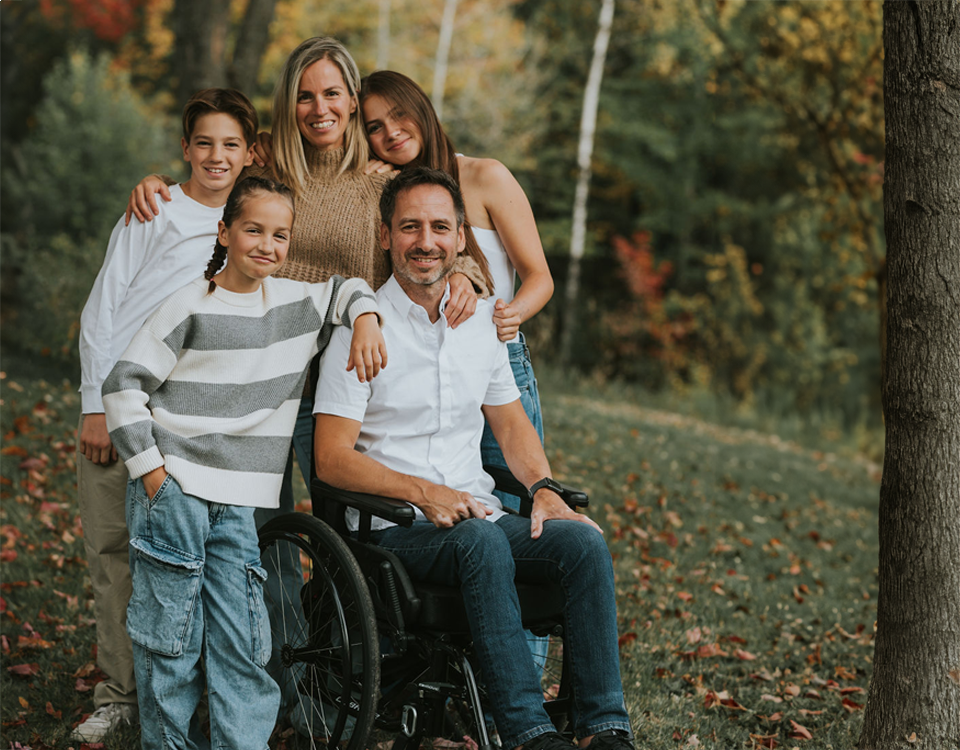
Back in March 2022, Yannik Richard had a fairly normal life: he was happy in a stable relationship, had three kids, was healthy, and owned his own business, all of which seemed to be going relatively smoothly. One day, while walking with his wife, he twisted his ankle. Since this was an unusual injury for him, he decided to go to the hospital and get himself checked out. The doctors ran some tests, and when the results came back, the life of Yannik and his family took an unexpected turn: He had been diagnosed with Amyotrophic Lateral Sclerosis (ALS).
This diagnosis changed everything. It reshaped the way Yannik lived and functioned each day, while also confronting him with the difficult reality of what an ALS diagnosis truly means—physically, emotionally, and mentally.
Yannik is one of the few people in the world living with the rare SOD1 form of ALS (only found in 2% of the ALS cases). Yannik has turned his diagnosis into a call to action. With unmatched determination and now the support of Motion Composites, he is raising awareness, striving to build a community, and proving that while ALS may affect the body, it cannot affect your determination to prove that life is beautiful!
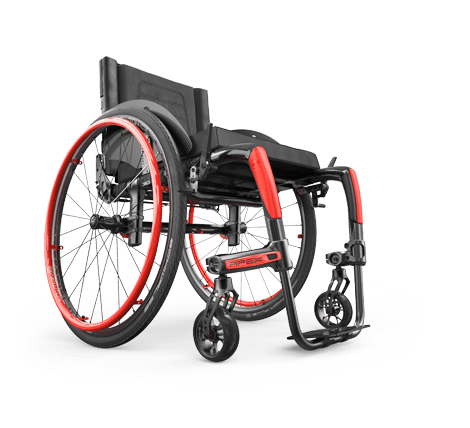
On September 22, 2025, Yannik Richard will embark on an extraordinary journey—The Great ALS Journey—a 4,500 km trek across Canada in just 35 days, utilizing a power-assisted APEX Carbon rigid wheelchair.
We were eager to meet Yannick to find out what really inspired him to embark on a coast-to-coast adventure that will allow him to discover Canada in a way that only a few others have accomplished!
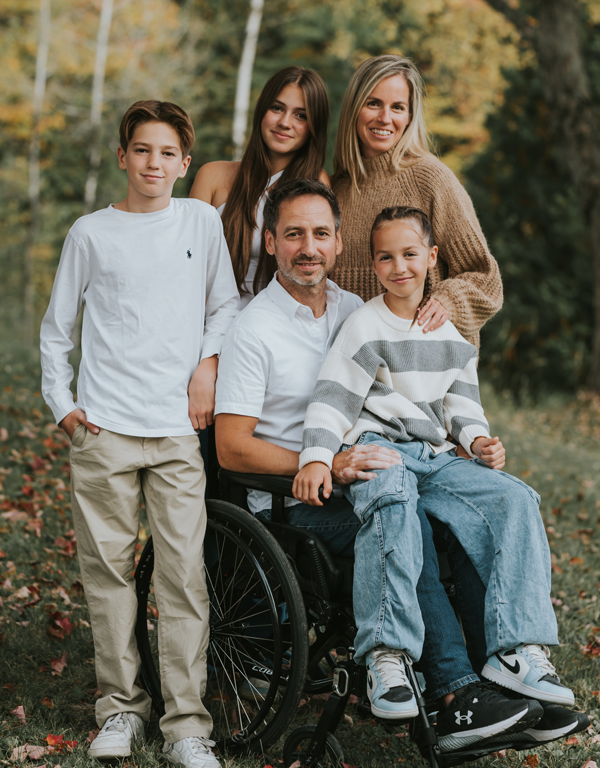
Yannik Richard: My goal is to do about 150 km per day, which I estimate will take five to six hours. I’ve never crossed Canada before, and once I get past Ontario, there’ll be lots of hills—and possibly dangerous roads—so I may have to take detours. But I’m keeping it to a max of six hours a day.
Each morning, I’ll start with chair-based exercises. I follow a French trainer named Soline who runs online workouts, and I’ve been doing her sessions for a year now. I reached out to her about my journey, and we’re planning a live international session—Europe and Canada working out together. I’ll probably do it from the Rockies, and if we get 100 people to join, it’ll be a big event. It’s not just for people with ALS—others with conditions like multiple sclerosis or arthritis can join too. For me, it’s essential for staying healthy.
After exercising, I’ll roll from about 7 or 8 a.m. to 11, then have lunch in the RV with my friends. In the afternoon, there might be interviews or meetups with others living with ALS, then I’ll roll again for 2–3 hours. In the evening, we’ll camp, send out videos, and relax by the fire.
My childhood friends are taking turns driving the RV—each week someone new. They’ll each choose one special activity along the way, like a rodeo or maybe a football game in memory of someone who had ALS. It’s going to be a big adventure—and I’ll be using your wheelchair the whole time.
YR: Definitely, the biggest challenge will be the loss of mobility. With my illness, I’m not supposed to push myself too hard—once I lose function in a part of my body, I can’t get it back. So there’s a risk I’ll lose strength in my arms, hands, or wrists. I might come back weaker than when I left, and honestly, I just hope I’ll still be able to feed myself afterward.
That’s why I plan to do recovery exercises after every three-hour session—eat well, stretch, and try to stay balanced. But really, it’s a bit of a coin toss.
I’ve never traveled across Canada before. There are probably a lot of hills… and maybe even bears or wolves. Hopefully not too many, but if I do run into one while in my wheelchair—I’ll have to go fast! We’ll try to film them too.
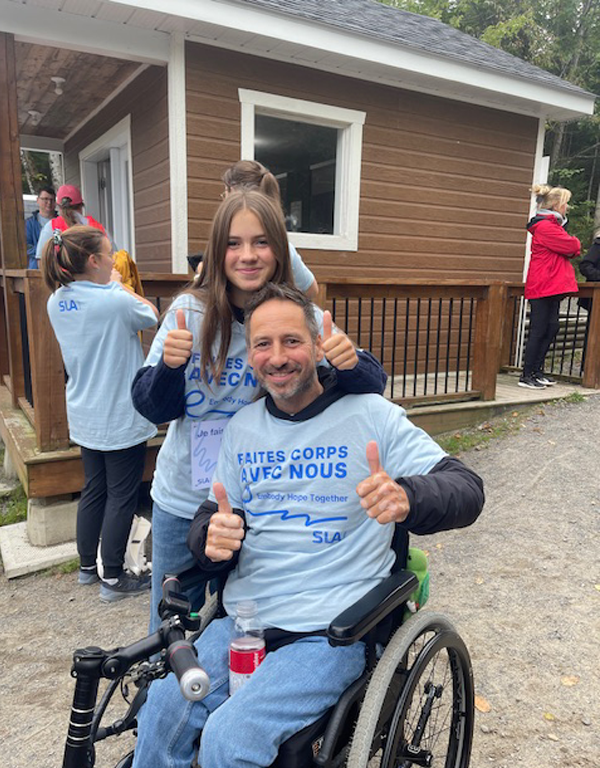
YR: I’m working with a project manager who crossed Canada two years ago—she mapped out the entire schedule, which really takes a big mental load off my shoulders. And I’m surrounded by people I love, so I won’t feel alone. That’s really important to me.
Emotionally, I want this to be a joyful, festive journey—nothing heavy or depressing. I make sure to surround myself with positive, inspiring people.
YR: What I want people to know about ALS is that it’s an incurable disease with no medication. Many people living with ALS are paralyzed, some on ventilators or bedridden. But despite that, there’s movement—people fighting, research happening, global mobilization. There are people speaking and moving for those who can’t anymore.
YR: When you’re told your time is limited, your entire perspective shifts. For me, it brought some positives—I’ve learned to see each day as a gift and try to find one small joy every day. But it’s much harder on my caregivers, especially my partner and kids. They didn’t choose this. My partner was 44—she didn’t sign up to be pushing someone in a wheelchair.
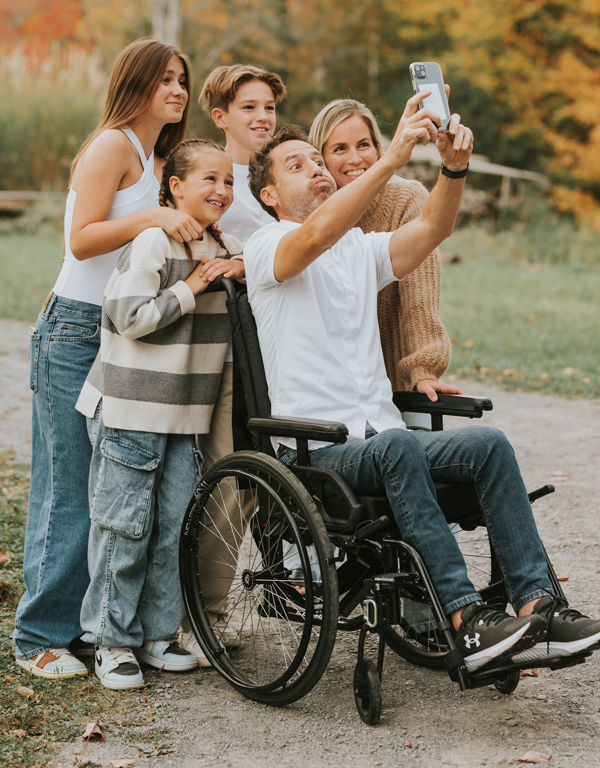
YR: As for how Canada could do better, there’s still a long way to go. The medication I’m currently on isn’t covered by RAMQ (RAMQ stands for the Régie de l'assurance maladie du Québec. It is the Quebec public health insurance board that manages the province's health insurance plan and the public prescription drug insurance plan). I have access through a special contract until March 2026, but after that, I may not be able to get it anymore—and it’s the drug that’s keeping me alive. I recently met with the Minister of Health’s office and a neurologist to advocate for its public coverage. It’s under evaluation right now, and hopefully in the future it’ll be available in a more affordable pill form. But for now, it must be publicly funded.
Also, every province should protect and support its ALS organization like we do in Quebec. And we must protect end-of-life rights. Here in Quebec, ALS often gives access to medical assistance in dying—something that’s not the case in many other parts of Canada or in Europe. It’s a crucial right we need to preserve.
YR: There are many promising projects underway, but we still need much more research—and that means more funding. Here in Montreal, we have internationally recognized researchers, so supporting them through fundraising is absolutely essential. I am hoping this adventure will bring more awareness and, consequently, also more funding.
YR: Like I mentioned, I can’t overexert myself—and having a Carbon Fiber APEX makes a big difference. It takes less effort to roll, which is so important for me. I definitely need a high-quality chair to get through this journey.
I’ve actually noticed how smooth it feels—turns out that’s one of the benefits of carbon fiber. It reduces vibrations, so road noise doesn’t transfer as much to the body. That means less strain on my shoulders and arms, and more overall comfort.
YR: Definitely how light it is. And how fast it rolls—I barely need to push, and it just glides.
YR: I come from a background in food marketing, where I always prioritized local products. Supporting local means creating jobs and reinvesting in our own communities. So for me, it’s something I’m really proud of—rolling across the country in a Quebec-made wheelchair, surrounded by fellow Quebecers.
YR: My family was surprised when I told them about the project—but not entirely. I’ve always taken on challenges. I’m not reckless, but I like to move forward. At first, my kids didn’t really understand. But then they saw me on TV and in the news, and their teachers even talked about it at school. Now they get it.
They’ll actually join me for the last five days of the trip. My wife is proud and supportive—she’s even planning a run at the finish line. It’s great to see her getting involved too.
YR: As an ambassador for ALS Québec, I’m often contacted by people who are newly diagnosed. Most are terrified—some have young children and fear they won’t see them grow up, others are already struggling with stairs. It’s a devastating diagnosis.
But I try to give them hope. There are treatments in development, even though it takes 7–10 years to approve a drug, and ALS progresses in just 2–5 years. That’s why we fight today, for the future.
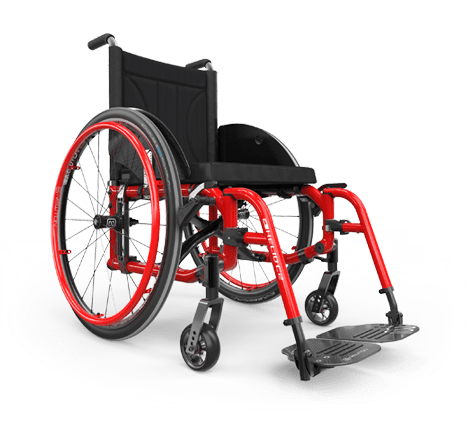
We already have tools that help—lighter wheelchairs like the APEX C, assistive tech, and eye-tracking devices for communication. I truly believe that in 5 to 10 years, we’ll see bionic arms and legs. We just have to keep going, every day, to be here when the breakthroughs come.
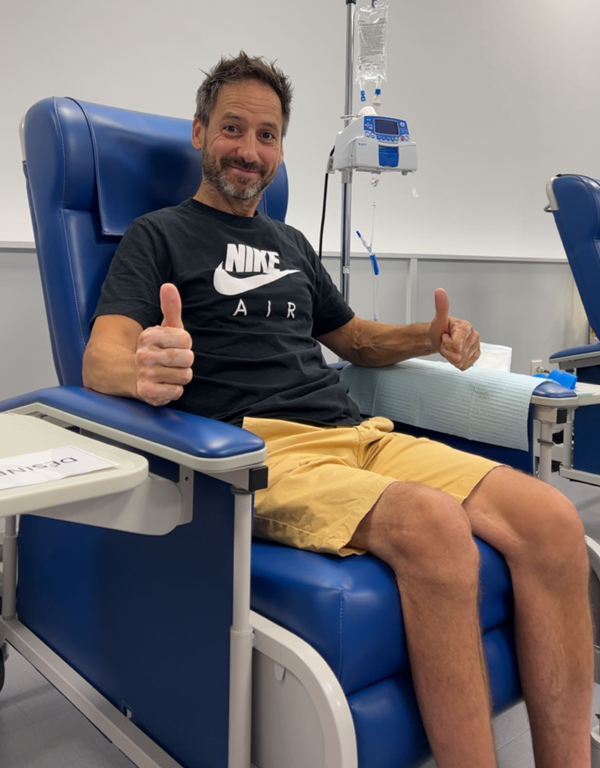
We want to thank Yannik for taking the time to meet with us and share more about this adventure that will take him across Canada, surrounded by his loved ones.
If you want to be part of his journey, don’t forget to follow him on social media (Facebook, Instagram, TikTok), and check back on our website for updates on Yannik's whereabouts. Finally, don't miss the opportunity to support Yannik's project here.
Finally, if you happen to be in the Prévost, Quebec area on October 25th, be sure to attend the arrival of Yannik. Learn more about the details of the event on his social media platforms.