Redefining Care: Capucine’s Journey as a Nurse using an APEX C
Nurses are the backbone of the medical system worldwide. They are the definition of dedication and resilience.
Nurses are the backbone of the medical system worldwide. They are the definition of dedication and resilience.
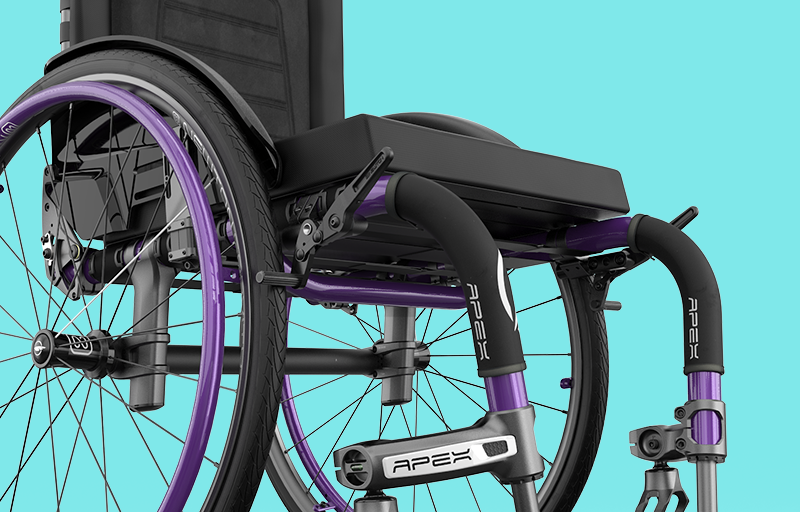
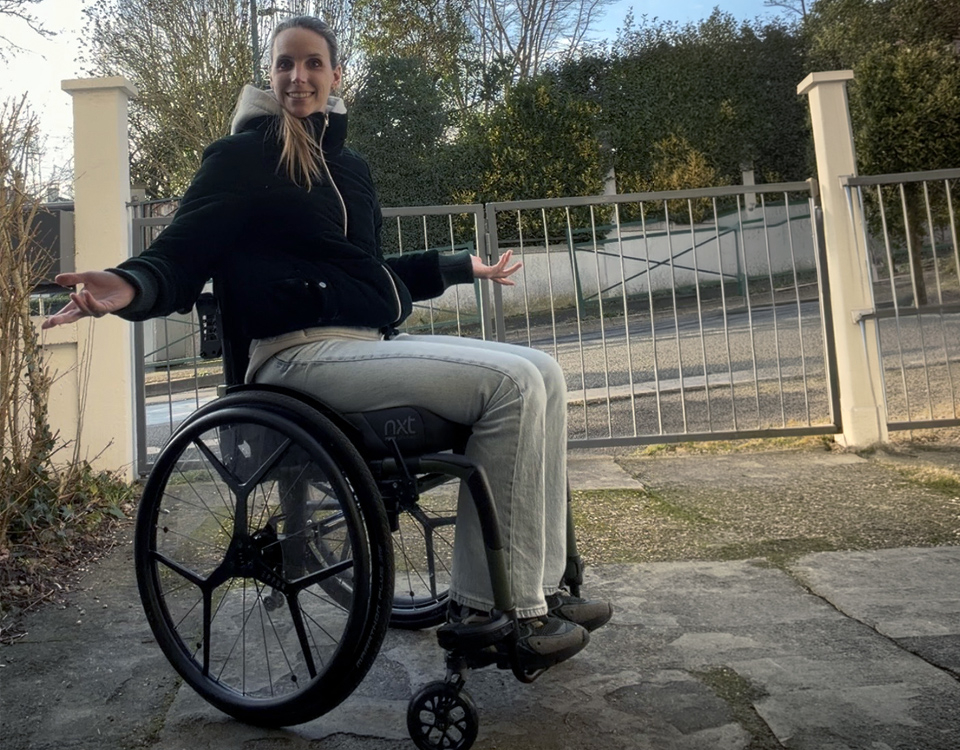
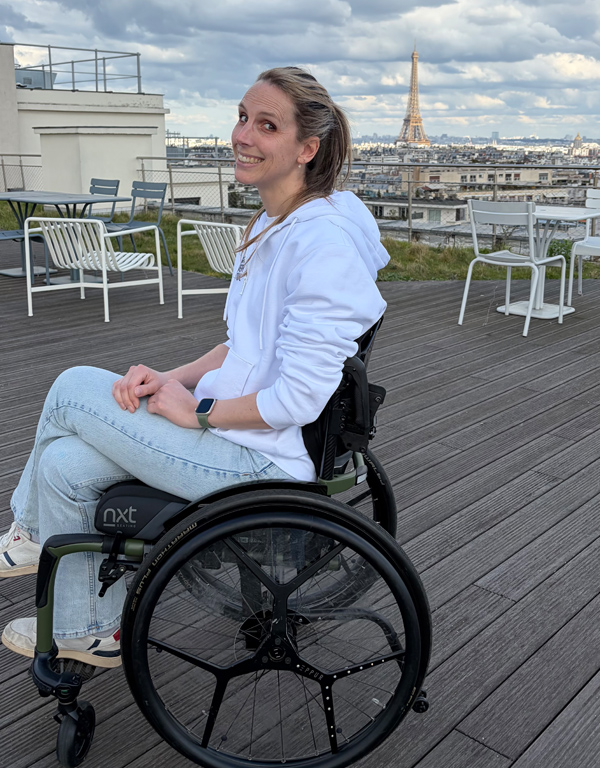
Meet Capucine, a passionate nurse who has built a career rooted in care, prevention, and inclusion, all while navigating the reality of living with an invisible disability. Capucine is also an ambulatory wheelchair user who uses a Khaki Green APEX Carbon Rigid Wheelchair.
Since 2019, she’s been working as an in-house nurse at the Lacoste offices in Paris. She focuses on keeping employees healthy, leading prevention efforts, training first responders, and supporting disability inclusion in the workplace. She’s also the Disability Liaison Officer in Lacoste, which means she helps other employees with disabilities prepare their case files so the company can properly set up their workstations to accommodate them for their specific needs.
During the fall of 2025, and as a part of the European Week for Employment of People with Disabilities (SEEPH), Capucine participated in crafting a video together with Lacoste to talk about her experience working for the brand while living with a disability and showcase how she has been supported in her career path with the brand.
You can watch the video here:
After watching this compelling video, we wanted to meet Capucine, learn more about her passions, her job as a nurse, and how her APEX C contributes to her day-to-day.
Interview:
Capucine Calloud: I started my career in 2006, mainly in emergency departments and highly technical environments like recovery rooms and respiratory and thoracic intensive care units.
At the same time, I was a firefighter nurse for eight years, responding in the field to support teams and care for victims. It was an intense and incredibly enriching experience.
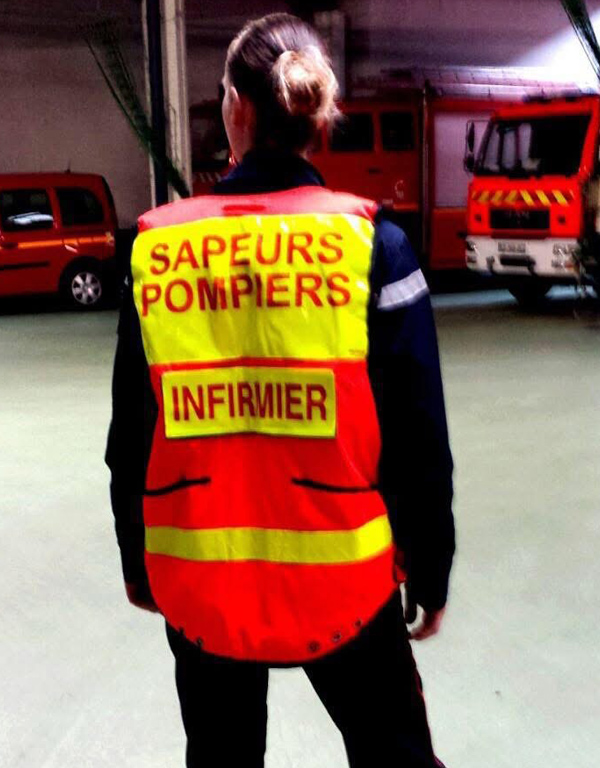
Today, I work as an in-house nurse at Lacoste, a role I helped structure. I take care of employee health, prevention, first-aid training, and I also support disability inclusion in the workplace as a Disability Liaison Officer.
CC: I live with several chronic conditions that interact with each other. The first is Kallmann syndrome, an endocrine disorder that affects my hormonal system. On its own, it is well managed, although it has had a significant impact on my life, especially on my journey to having a child.
On top of that, I have an important degree of dysautonomia, a disorder of the autonomic nervous system, diagnosed several years ago. More recently, doctors have also identified a connective tissue disorder associated with joint hypermobility, which is Ehlers-Danlos syndrome.
What makes things more complex is how these conditions affect each other. For example, hormonal fluctuations can worsen dysautonomia symptoms.
On a daily basis, this results in significant fatigue, difficulty regulating certain bodily functions, and a constant need to adapt. But over time, I’ve learned to better understand how my body works and to find ways to keep moving forward, both professionally and personally.
CC: For me, the hardest part is that my disability is invisible. Like many people living with chronic illness, I’m used to “acting as if all is good,” carrying a constant weight that no one can see.
Getting up, commuting to work, staying focused all day… all of it requires constant adaptation, which is exhausting. Even though I manage, I do it by choice, out of passion for my job, but it takes a lot of energy.
At home, I often experience a “crash”: fatigue and a need to recover, but I still push through and use my remaining energy to exercise, which helps me both physically and mentally.
If I had to sum it up, the biggest daily challenge is this constant over-adaptation required to keep living and working fully despite the illness.
CC: Since this project was part of the European Week for the Employment of People with Disabilities, a key moment in Europe to raise awareness, share experiences, and highlight disability-related issues, it felt especially meaningful.
At Lacoste, that week is always very busy, and I had long wanted to create a project that would allow us to share real-life experiences. The idea was to show how we are supported on a daily basis and how we experience our work while living with a disability. Several colleagues agreed to be a part of it. It was such an enriching experience!
Professionally, it simply reinforced how thankful I am with Lacoste. But on a more personal level, it helped me own my story. People who live with disabilities, visible or invisible, face different challenges that fully abled people don’t see, and sharing them, seeing them from the outside, allows you to step back and say: “Yes, this is my reality, and I’m doing something with it”.
CC: For me, it’s not just about representation. Representation would simply mean showing disability.
At Lacoste, I feel that people are supported as they are. My disability is part of who I am, part of my life, and the company puts the right measures in place so I can work in the best possible conditions.
In the end, that’s what inclusion means to me: not just thinking in terms of disability, but asking what can be done so each employee can work, thrive, and use their full potential. It’s not about image, it’s about genuinely supporting people in their daily lives.
CC: Before, I had a heavy and poorly adapted wheelchair, which didn’t fit my very active lifestyle. I needed something lightweight and easy to handle; my APEX C truly follows me throughout my day. It’s not me controlling it; it supports me, helping me save energy and avoid difficult situations or episodes of discomfort.
It allows me to choose where and when to spend my energy, which makes my days more manageable and gives me the freedom to enjoy my life, even after work. I almost see it as an essential tool: it doesn’t save my life, but it allows me to fully live it.
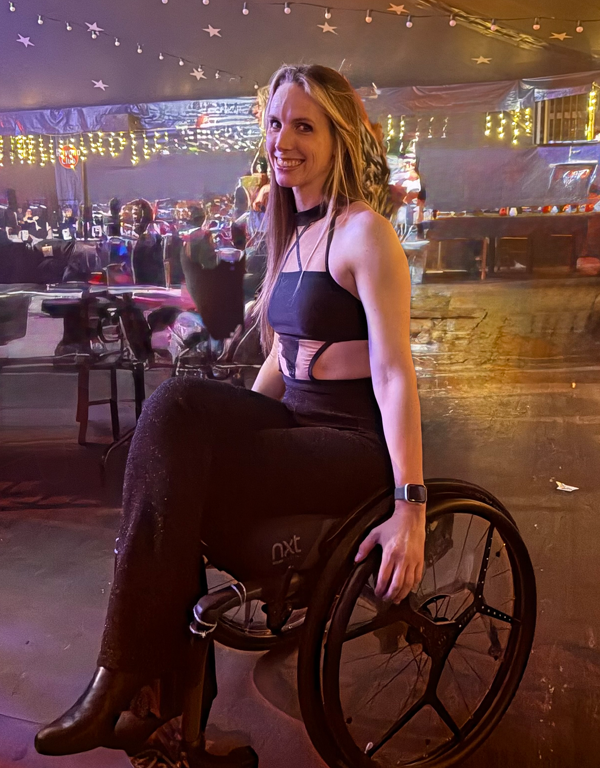
CC: Yes, absolutely. The cushions are already very well adapted, which provides real everyday comfort. But what truly makes the difference for me with the APEX C is its lightness and maneuverability.
I have significant issues with my hands and shoulders, so every movement matters. Being able to easily grab the chair, whether by the backrest or the handling points, makes all movements much smoother. Whether I’m folding it, taking it apart, or loading it into my car, everything can be done without excessive effort.
Even when I need to remove the wheels to fit it into my trunk, once it’s disassembled, I can handle it almost with one hand, without strain or pain. And that changes everything in my daily life.
Since I started using it, I’ve felt a real difference: I hardly have any pain related to handling anymore, and most importantly, I no longer have that fear of repeated movements. It’s a gain in energy and comfort that allows me to focus on the rest of my day.
CC: Independence, for me, is the ability to live the life you want without depending on anyone. It’s also about feeling good with yourself and being able to live with your body and mind the way you want. Physically, with the support I have, I’m starting to feel more independent. My wheelchair helps me a lot, even though there are still some things I need to be fully autonomous. My goal is also to inspire others living with chronic illness to feel that sense of independence.
We want to thank Capucine for sharing her experience with the APEX C with us, and for taking the time to tell us more about her journey as a nurse, and reminding us that nurses are not just compassionate, but also caring and resilient.
This International Nurses Day, join us in celebrating and thanking them for their passion and their endurance!