Through this initiative, Motion Composites aims to provide individuals with the mobility equipment they need to reclaim independence, access their communities, and live life on their own terms.
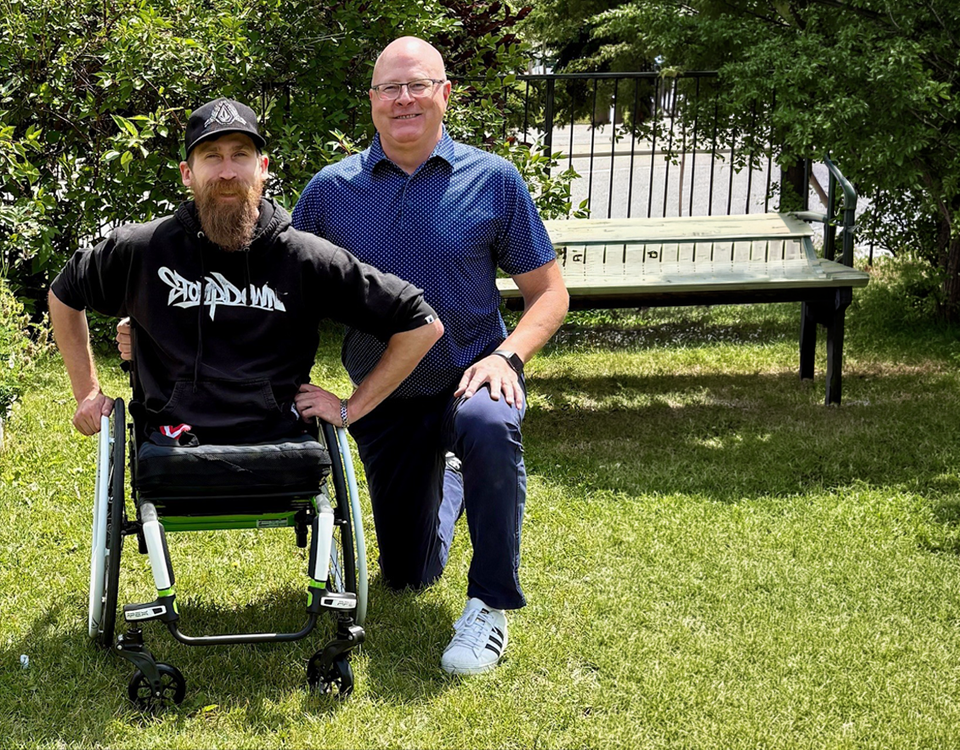
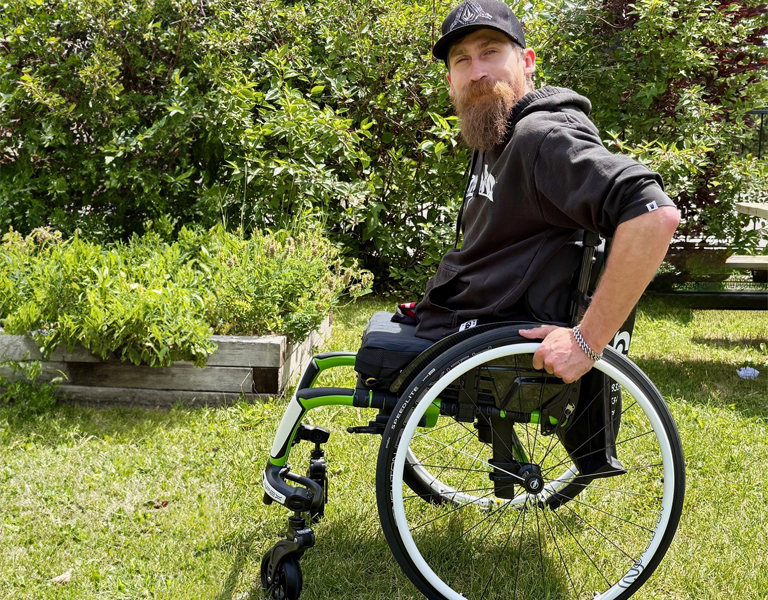
The Wishes for Wheels Program gave ultralightweight wheelchairs to 8 individuals in Canada and the United States in 2025. One of them was Patrick Lewis, an adrenaline-seeking, sport-oriented, proud Canadian, who was selected to benefit from the Wishes for Wheels Program. He received an APEX C in July, and since that day, his life and his independence have been forever changed. Click here to learn more about Patrick's experience with the Wishes for Wheels Program.
However, the Wishes for Wheels Program would not be able to provide freedom to the individuals selected without the dealers and clinicians out there who are only seeking the best for their patients and who see who can benefit from a program like this one.
For this article, we talked with Jim Frid, Rehab Sales Lead at National Seating & Mobility in Calgary, to hear about his experience supporting Patrick. From customizing the perfect wheelchair to seeing the joy and freedom it brings, Jim shared with us why initiatives like Wishes for Wheels matter, and why access to quality mobility solutions can truly change a life.
Interview:
MC: Can you tell us a little bit about your role and how you got involved in the Wishes for Wheels program?
Jim Frid: I’m the Rehab Sales Lead at NSM in Calgary, and I also work full-time in sales. In addition to that, I’m involved in various internal management responsibilities, so my role spans both client-facing work and behind-the-scenes operations.
As for the Wishes for Wheels Program, I actually wasn’t familiar with it at first. I learned about it when Patrick reached out to let me know he had been approved for it, which is how I became involved in the process.
MC: Why was it important for you and your team to support this program and Patrick?
Jim Frid: This was extremely important because Patrick has a very real and specific need for this type of wheelchair. Under our government program, if someone is provided with a power wheelchair, the expectation is that a basic manual wheelchair will serve only as a backup. However, given Patrick’s very active lifestyle, that approach simply doesn’t work.
In many situations, a power wheelchair isn’t adaptable to the environments Patrick navigates every day. A high-performance manual wheelchair is essential for his independence and mobility.
Patrick is a paraplegic, and he is also a double amputee at the pelvis level. Together, these factors make having the right manual wheelchair not just beneficial, but necessary.
MC: From your perspective, what makes Patrick's new APEX C wheelchair special compared to his old manual wheelchair?
Jim Frid: The most noticeable difference is how much lighter the APEX C is compared to Patrick’s previous manual wheelchair. That extreme lightweight carbon design makes a real impact on his day-to-day independence.
Patrick wants to drive his own vehicle again, and it isn’t an adapted vehicle. With the APEX C, he can transfer into the driver’s seat and then independently lift and load the chair into the car. That level of lightness and maneuverability gives him the freedom to go wherever he wants, whenever he wants.
MC: What was the process like with the Wishes for Wheels Program?
Jim Frid: The process was very easy, much easier than I expected. In fact, it was so straightforward that I’ve already shared information about Wishes for Wheels with several of my colleagues at National Seating & Mobility, as well as with Spinal Cord Injury Alberta and others who may benefit from the program.
It’s an accessible process, and that makes a real difference for people who truly need this kind of support.
MC: What was the process like in customizing the APEX C to meet Patrick's specific needs and lifestyle?
Jim Frid: The customization process was very straightforward. We sat Patrick up in one of the Motion Composites demos that we have in stock, took all the necessary measurements, and reviewed the options available to best match his needs and lifestyle.
It’s something I do daily, so the process was smooth and efficient, and we were able to ensure the chair was truly tailored to Patrick.
MC: You already mentioned that the wheelchair is like more compact and super lightweight, but was there any other particular feature or detail of the wheelchair that you think will make the biggest difference for Patrick?
Jim Frid: Beyond being compact and super lightweight, the rigidity of the APEX C and the solid backrest are key features that will make a big difference for Patrick. The backrest provides the support he needs, especially since he no longer has functional legs, just his pelvis. This setup allows the chair to be fully adapted to his specific needs and gives him the stability and independence he requires.
MC: Why do you feel that programs like this are needed, and what does it mean for people who fall through the cracks of the system, a little bit like what happened with Patrick?
Jim Frid: I think there’s a huge need for programs like Wishes for Wheels. There are countless clients who, like Patrick, fall through the cracks of the system.
Funding and requirements for lightweight, rigid manual wheelchairs vary from province to province, and not everyone qualifies for what they truly need. In some cases, even repairs aren’t covered, so if a chair breaks, the cost falls on the individual, which many simply can’t afford. Programs like this help fill that gap and give people access to equipment that’s essential for their independence and quality of life.
MC: What message would you like to share with other people about the importance of accessibility and access to quality mobility equipment?
Jim Frid: One message I’d like to share is for able-bodied people to really understand how inaccessible the world can be for someone with a mobility-related disability. Many people don’t realize just how many barriers exist in everyday environments.
Lightweight, highly maneuverable equipment like Patrick’s APEX C is more than just a chair; it’s a tool that allows people to safely and efficiently access their communities and live more independently.
When someone becomes a paraplegic or loses lower-body mobility, or even arm mobility, they lose the simple ability to move through the world freely. Many can’t drive or access places easily, and there aren’t always accessible vehicles or environments to support them. Programs and equipment that fill these gaps are critical for helping people maintain their independence and quality of life.
MC: Would you continue supporting initiatives like the Wishes for Wheels? And if yes, why?
Jim Frid: Absolutely. There’s a real need for programs like Wishes for Wheels in our community, especially in today’s world where funding is becoming more limited and costs are constantly rising. Programs like this help fill the gaps and provide essential support to people who might otherwise fall through the cracks.
MC: Is there anything you would like to share about your experience working with Motion Composites and the Wishes for Wheels Program?
Jim Frid: Working with Motion Composites and the Wishes for Wheels team was a true pleasure! The process was smooth and straightforward, and most importantly, it made Patrick incredibly happy. Being able to see the positive impact on his independence and daily life was really rewarding.
We want to thank Jim for taking the time to meet with us to discuss the Wishes for Wheels Program and for the time he dedicated to helping us provide Patrick with the custom-fitted wheelchair he needed.
If you or someone you know uses a wheelchair and could benefit from a high-end ultralightweight manual chair, but don’t have the means to obtain one, we encourage you to apply for the Wishes for Wheels Program. The application is simple, straightforward, and can be completed entirely online.
Learn more about the Wishes for Wheels Program or apply today!